
Interesting times
a twentieth-century life
1st ed.
Our rough guess is there are 111,750 words in this book.
At a pace averaging 250 words per minute, this book will take 7 hours and 27 minutes to read. With a half hour per day, this will take 15 days to read.
How long will it take you?
This book will take an estimated to read at a reading speed averaging words per minute. With 30 minutes per day, this will take to read.
Enter your reading speedYou can take one of our WPM reading speed tests to find your reading speed.
Create a free account to track your reading progress, build your reading list, and set reading goals.
We earn a commission on purchases
Author
Publication
2002 - Pantheon Books, New York, New York (State)
Language
English
Word Count
111,750 words, Guess
Page Count
447 pages
Identifiers
- Open LibraryOL3578982M
- ISBN-10037542234X
- OCLC Control Number50851777
- OCLC Control Numberinterestingtimes0000hobs_z1l5
- Library of Congress Control Number2002192691
and 2 more
- LibraryThing13049
- Goodreads308061
Classifications
- DDC909.82/092
- LCCD15.H63 A3 2002
Description
"Eric Hobsbawm is considered by many to be our greatest living historian. Robert Heilbroner, writing about Hobsbawm's Age of Extremes, 1914-1991, said, "I know of no other account that sheds as much light on what is now behind us, and thereby casts so much illumination on our possible futures." Skeptical, endlessly curious, and almost contemporary with the terrible "short century" that is the subject of The Age of Extremes, his most widely read book, Hobsbawm has, for eighty-five years, been committed to understanding the "interesting times" through which he has lived." "Hitler came to power as Hobsbawm was on his way home from school in Berlin, and the Soviet Union fell while he was giving a seminar in New York. He was a member of the Apostles at King's College, Cambridge, took E.M. Forster to hear Lenny Bruce, and demonstrated with Bertrand Russell against nuclear arms in Trafalgar Square. He translated for Che Guevara in Havana, had Christmas dinner with a Soviet master spy in Budapest, and spent an evening at home with Mahalia Jackson in Chicago. He saw the body of Stalin, started the modern history of banditry, and is probably the only Marxist ever asked to collaborate with the inventor of the Mars bar." "Hobsbawn takes us from Britain to the countries and cultures of Europe, to America (which he appreciated first through movies and jazz), to Latin America, Chile, India, and the Far East. With Interesting Times, we see the history of the twentieth century through the unforgiving eye of one of its most intensely engaged participants, the incisiveness of whose views we cannot afford to ignore in a world in which history has come to be increasingly forgotten."--Jacket.
Subjects
Topics
Places
People
Times
Genres
- Biography.
Other Editions
- Interesting times: a twentieth-century life
Show 1 more editions
Similar Books

Turbulent passage: a global history of the twentieth century
Michael Adas, Peter N. Stearns, Stuart B. Schwartz.

The Age of Extremes: A History of the World, 1914-1991
E. J. Hobsbawm
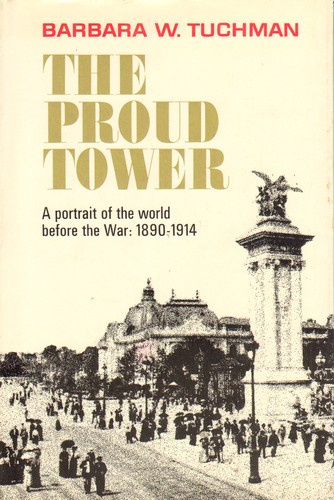
The proud tower: a portrait of the world before the war, 1890-1914
[by] Barbara W. Tuchman.

Modern Times: The World from the Twenties to the Nineties
Paul Bede Johnson, Paul Johnson
Reader Reviews
No reviews yet for this book.
Be the first to share your thoughts!