
Working knowledge
how organizations manage what they know
Our rough guess is there are 49,750 words in this book.
At a pace averaging 250 words per minute, this book will take 3 hours and 19 minutes to read. With a half hour per day, this will take 7 days to read.
How long will it take you?
This book will take an estimated to read at a reading speed averaging words per minute. With 30 minutes per day, this will take to read.
Enter your reading speedYou can take one of our WPM reading speed tests to find your reading speed.
Create a free account to track your reading progress, build your reading list, and set reading goals.
We earn a commission on purchases
Contributions
- Prusak, Laurence. - Contributor
Publication
1998 - Harvard Business School Press, Boston, Mass, Massachusetts
Language
English
Word Count
49,750 words, Guess
Page Count
199 pages
Identifiers
- Open LibraryOL665165M
- ISBN-100875846556
- OCLC Control Number36695904
- Internet Archiveworkingknowledge00dave
- Library of Congress Control Number97010781
and 2 more
- LibraryThing3848
- Goodreads2167887
Classifications
- DDC658.4/03
- LCCHD58.82 .D38 1998
- LCCHD58.82.D38 1998
Description
"Drawing from their work with more than thirty knowledge-rich firms, Davenport and Prusak examine how all types of companies can effectively understand, analyze, measure, and manage their intellectual assets, turning corporate wisdom into market value. They categorize knowledge work into four sequential activities - accessing, generating, embedding, and transferring - and look at the key skills, techniques, and processes of each. While they present a practical approach to cataloging and storing knowledge so that employees can easily leverage it throughout the firm, the authors caution readers about the limits of communications and information technology in managing intellectual capital."--Jacket.
Subjects
Topics
Links
Other Editions
- Working knowledge
Similar Books

Knowing in Organizations: A Practice-Based Approach
Silvia Gherardi

Internet-Based Organizational Memory and Knowledge Management
David G. Schwartz, Monica Divitini

The fifth discipline: the art and practice of the learning organization
Peter M. Senge.
Managing the Unexpected: Resilient Performance in an Age of Uncertainty
Kathleen M. Sutcliffe, Karl E. Weick

The Innovator's Dilemma: When New Technologies Cause Great Firms to Fail
Clayton M. Christensen, L J Ganser, Don Leslie
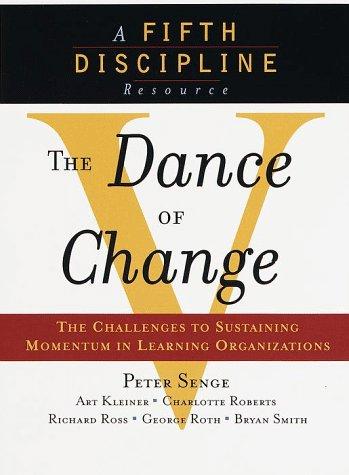
The Dance of Change: The Challenges to Sustaining Momentum in Learning Organizations
Peter Senge, Charlotte Roberts, Rick Ross, Bryan Smith, Art Kleiner, George Roth

Rethinking the knowledge controversy in organization studies: a generative uncertainty perspective
Walter R. Nord, Ann F. Connell

Handbook of organizational learning and knowledge management
edited by Mark Easterby-Smith, Marjorie A. Lyles
Reader Reviews
No reviews yet for this book.
Be the first to share your thoughts!