
Sweet violence
the idea of the tragic
Our rough guess is there are 82,000 words in this book.
At a pace averaging 250 words per minute, this book will take 5 hours and 28 minutes to read. With a half hour per day, this will take 11 days to read.
How long will it take you?
This book will take an estimated to read at a reading speed averaging words per minute. With 30 minutes per day, this will take to read.
Enter your reading speedYou can take one of our WPM reading speed tests to find your reading speed.
Create a free account to track your reading progress, build your reading list, and set reading goals.
We earn a commission on purchases
Word Count
82,000 words, Guess
Page Count
328 pages
Identifiers
- Open LibraryOL3551964M
- ISBN-100631233598
- OCLC Control Number51717444
- Internet Archivesweetviolenceide0000eagl
- Library of Congress Control Number2002001533
and 2 more
- LibraryThing330309
- Goodreads4714106
Classifications
- DDC809/.9162
- LCCPN56.T68 E18 2003
- LCCBH301.T7
Description
In this dazzling book Terry Eagleton provides a comprehensive study of tragedy, all the way from Aeschylus to Edward Albee, dealing with both theory and practice, and moving between ideas of tragedy and analyses of particular works and authors. This amazing tour de force steps out beyond the stage to reflect not only on tragic art but also on real-life tragedy. It explores the idea of the tragic in the novel, examining such writers as Melville, Hawthorne, Stendhal, Tolstoy, Flaubert, Dostoevsky, Kafka, Manzoni, Goethe and Mann, as well as English novelists. -- from back cover.
Subjects
Other Editions
- Sweet violence: the idea of the tragic
Similar Books
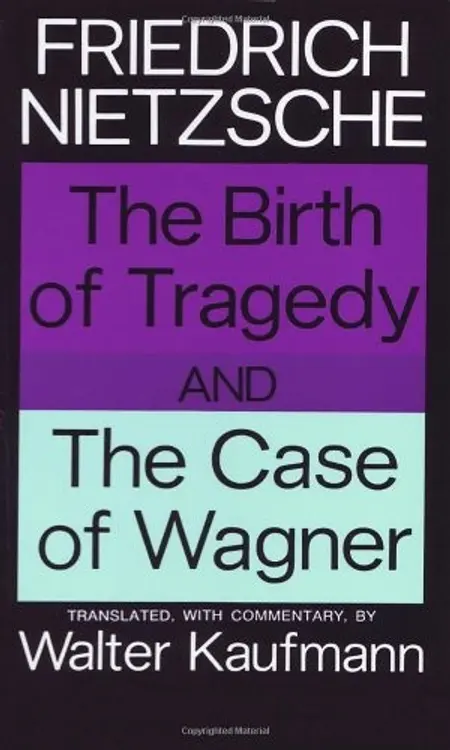
The Birth of Tragedy: and The Case of Wagner
by Friedrich Nietzsche ; translated, with commentary, by Walter Kaufmann.

Modern tragedy
Raymond Williams.
Themes and conventions of Elizabethan tragedy.
M. C. Bradbrook
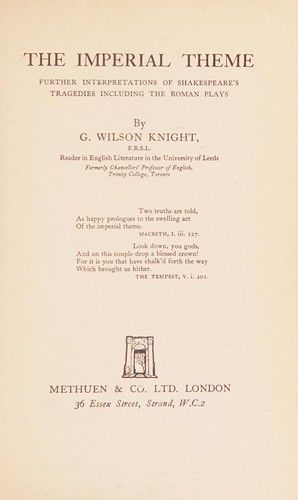
Imperial Theme: Further Interpretations of Shakespeare's Tragedies Including the Roman Plays
George Wilson Knight, G. Knight

Radical tragedy: religion, ideology, and power in the drama of Shakespeare and his contemporaries
Jonathan Dollimore.
Reader Reviews
No reviews yet for this book.
Be the first to share your thoughts!