
Machiavelli's legacy
The Prince after five hundred years
Our rough guess is there are 50,750 words in this book.
At a pace averaging 250 words per minute, this book will take 3 hours and 23 minutes to read. With a half hour per day, this will take 7 days to read.
How long will it take you?
This book will take an estimated to read at a reading speed averaging words per minute. With 30 minutes per day, this will take to read.
Enter your reading speedYou can take one of our WPM reading speed tests to find your reading speed.
Create a free account to track your reading progress, build your reading list, and set reading goals.
Author
Publication
2016 - University of Pennsylvania Press, Pennsylvania
Language
English
Word Count
50,750 words, Guess
Page Count
203 pages
Identifiers
- ISBN-100812247698
- ISBN-139780812247695
- Library of Congress Control Number2015025668
- OCLC Control Number913117017
- Better World Books9780812247695
and 1 more
- Open LibraryOL27197495M
Classifications
- DDC320.1
- LCCJC143.M4 M3228 2016
- LCCJC143.M4M3228 2016
Description
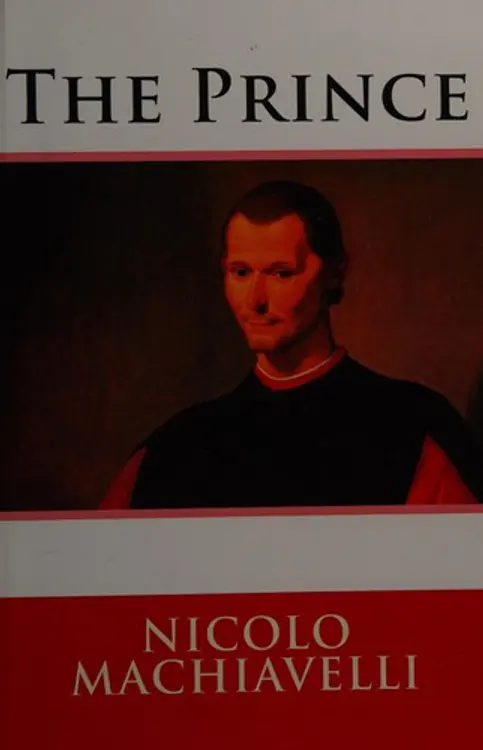
Niccolo Machiavelli's The Prince is one of the most celebrated and notorious books in the history of Western political thought. It continues to influence discussions of war and peace, the nature of politics, and the relation of private ethics to public duties. Ostensibly a sixteenth-century manual of instruction on certain aspects of princely rule and behavior, The Prince anticipates and complicates modern political and philosophical questions. What is the right order of society? Can Western politics still be the model for progress toward peace and prosperity, or does our freedom to create our individual purposes and pursuits undermine our public responsibilities? Are the characteristics of our politics markedly different, for better or for worse, than the politics of earlier eras? Machiavelli argues that there is no ideal, transcendent order to which one can conform, and that the right order is merely the one that has the capacity to persist over time.^ The Prince's emphasis on the importance of an effective truth over any abstract ideal marks it as one of the first works of modern political philosophy. Machiavelli's Legacy situates Machiavelli in general and The Prince in particular at the birth of modernity. Joining the conversation with established Machiavelli scholars are political theorists, Americanists, and international relations scholars, ensuring a diversity of viewpoints and approaches. Each contributor elucidates different features of Machiavelli's thinking, from his rejection of classical antiquity and Christianity, to his proposed dissolution of natural roles and hierarchies among human beings.^ The essays cover topics such as Machiavelli's vision for a heaven-sent redemptive ruler of Italy, an argument that Machiavelli accomplished a profoundly democratic turn in political thought, and a tough-minded liberal critique of his realistic agenda for political life, resulting in a book that is, in effect, a spirited conversation about Machiavelli's legacy.--
Subjects
Similar Books
Reader Reviews
No reviews yet for this book.
Be the first to share your thoughts!