
The power of witnessing
reflections, reverberations, and traces of the Holocaust
Our rough guess is there are 108,000 words in this book.
At a pace averaging 250 words per minute, this book will take 7 hours and 12 minutes to read. With a half hour per day, this will take 15 days to read.
How long will it take you?
This book will take an estimated to read at a reading speed averaging words per minute. With 30 minutes per day, this will take to read.
Enter your reading speedYou can take one of our WPM reading speed tests to find your reading speed.
Create a free account to track your reading progress, build your reading list, and set reading goals.
We earn a commission on purchases
Word Count
108,000 words, Guess
Page Count
432 pages
Identifiers
- Open LibraryOL25046616M
- ISBN-139780415879026
- OCLC Control Number810082564
- OCLC Control Number703208664
- Library of Congress Control Number2011037872
Classifications
- DDC940.53/18
- LCCD804.348 .P69 2012
Description
Witnessing comes in as many forms as the trauma that gives birth to it. The Holocaust, undeniably one of the greatest traumatic events in recent human history, still resonates into the twenty-first century. The echoes that haunt those who survived continue to reach their children and others who did not share the experience directly. In what ways is this massive trauma processed and understood, both for survivors and future generations? The answer, as deftly illustrated by Nancy Goodman and Marilyn Meyers, lies in the power of witnessing: the act of acknowledging that trauma took place, coupled with the desire to share that knowledge with others to build a space in which to reveal, confront, and symbolize it. As the contributors to this book demonstrate, testimonial writing and memoir, artwork, poetry, documentary, theater, and even the simple recollection of a memory are ways that honor and serve as forms of witnessing. Each chapter is a fusion of narrative and metaphor that exists as evidence of the living mind that emerges amid the dead spaces produced by mass trauma, creating a revelatory, transformational space for the terror of knowing and the possibility for affirmation of hope, courage, and endurance in the face of almost unspeakable evil. Additionally, the power of witnessing is extended from the Holocaust to contemporary instances of mass trauma and to psychoanalytic treatments, proving its efficacy in the dyadic relationship of everyday practice for both patient and analyst. The Holocaust is not an easy subject to approach, but the intimate and personal stories included here add up to an act of witnessing in and of itself, combining the past and the present and placing the trauma in the realm of knowing, sharing, and understanding. -- Publisher's description.
Subjects
Topics
Similar Books
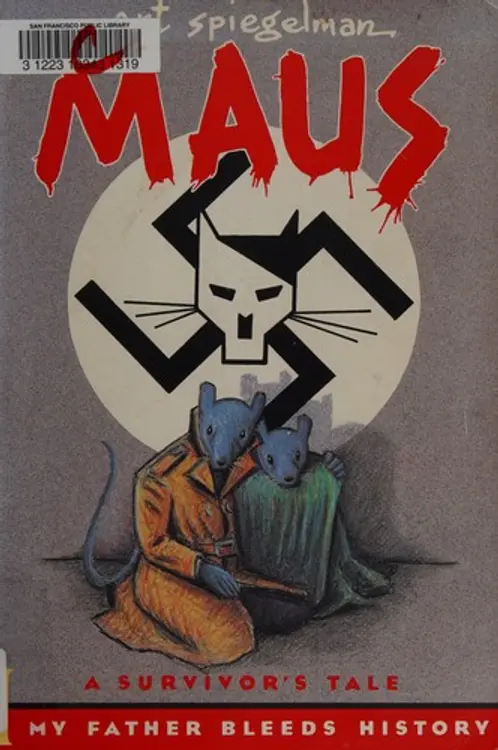
Maus I: a survivor's tale : my father bleeds history
Art Spiegelman.

The Complete Maus
Art Spiegelman

The Pianist: The Extraordinary Story of One Man's Survival in Warsaw, 1939-45
Władysław Szpilman, Anthea Bell, Wilm Hosenfeld

An Interrupted Life: The Diaries, 1941-1943 ; and, Letters from Westerbork
Etty Hillesum ; translated from the Dutch by Arnold J. Pomerans ; foreword by Eva Hoffman ; introduction and notes by Jan G. Gaarlandt.
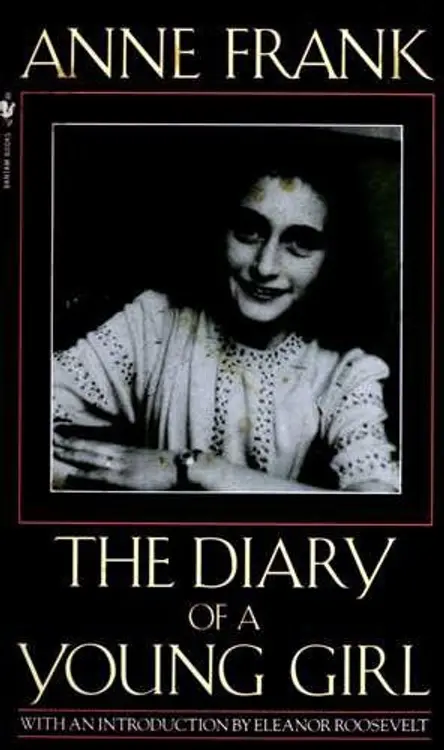
The Diary of a Young Girl
Anne Frank ; translated from the Dutch by B.M. Mooyaart-Doubleday ; with an introduction by Eleanor Roosevelt.
6h 8m read
Man's Search for Meaning
Viktor Emil Frankl
3h 32m read
People in Auschwitz
Hermann Langbein ; translated by Harry Zohn ; foreword by Henry Friedlander

Who was Anne Frank?
by Ann Abramson
Reader Reviews
No reviews yet for this book.
Be the first to share your thoughts!