
Herman Melville
A Biography (Volume 2, 1851-1891)
Our rough guess is there are 264,000 words in this book.
At a pace averaging 250 words per minute, this book will take 17 hours and 36 minutes to read. With a half hour per day, this will take 35 days to read.
How long will it take you?
This book will take an estimated to read at a reading speed averaging words per minute. With 30 minutes per day, this will take to read.
Enter your reading speedYou can take one of our WPM reading speed tests to find your reading speed.
Create a free account to track your reading progress, build your reading list, and set reading goals.
Author
Publication
2005-08-15 - The Johns Hopkins University Press, Baltimore, MD
Language
English
Word Count
264,000 words, Guess
Page Count
1,056 pages
Physical Format
Paperback
Identifiers
- ISBN-100801881862
- ISBN-139780801881862
- LibraryThing8223794
- Better World Books9780801881862
- Open LibraryOL7871361M
Classifications
- LCCPS2386.P37 2005
- DDC813/.3
- DDCB
and 1 more
- LCCPS2386 .P37 1996
Description
Volume 1 summary: Having left most of Moby-Dick with a printer in 1851, Herman Melville lamented to Nathaniel Hawthorne that he would go down in history as a "man who lived among the cannibals!" Until his death in 1891, Melville was known as the author of Typee (1846) and Omoo (1847) -- both semiautobiographical travel books, and literary sensations because of Melville's sensual description of the South Sea islanders. (A transatlantic furor raged over whether the books were fact or fiction.) His most famous character was Fayaway -- not Captain Ahab, not the White Whale, not Bartleby, and definitely not Billy Budd, whose story remained unpublished until 1924. Herman Melville: Volume 1, 1819-1851 is the first of a two-volume project constituting the fullest biography of Melville ever published. Hershel Parker, co-editor of the Northwestern-Newberry Edition of The Writings of Herman Melville, reveals with extraordinary precision the twisted turmoil of Melville's life, beginning with his Manhattan boyhood where, surrounded by tokens of heroic ancestors, he witnessed his father's dissipation of two family fortunes. Having attended the best Manhattan boys' schools, Herman was withdrawn from classes at the Albany Academy at age 12, shortly after his father's death. Outwardly docile, inwardly rebellious, he worked where his family put him -- in a bank, in his brother's fur store -- until, at age 21, he escaped his responsibilities to his impoverished mother and his six siblings and sailed to the Pacific as a whaleman. A year and a half after his return, Melville was a famous author, thanks to the efforts of his older brother in finding publishers. Three years later he was married, the man of the family, a New Yorker -- and still not equipped to do the responsible thing: write more books in the vein that had proven so popular. After the disappointing failure of Mardi, which he had hoped would prove him a literary genius, Melville wrote two more saleable books in four months -- Redburn and White-Jacket. Early in 1850 he began work on Moby-Dick. Moving to a farmhouse in the Berkshires, he finished the book with majestic companions -- Hawthorne a few miles to the south, and Mount Greylock looming to the north. Before he completed the book he made the most reckless gamble of his life, borrowing left and right (like his wastrel patrician father), sure that a book so great would outsell even Typee. Melville lovers have known Hershel Parker as a newsbringer -- from the shocking false report headlined "Herman Melville Crazy" to the tantalizing title of Melville's lost novel, The Isle of the Cross. Carrying on the late Jay Leyda's The Melville Log, Parker in the last decade has transcribed thousands of new documents into what will be published as the multi-volume Leyda-Parker The New Melville Log. Now, exploring the psychological narrative implicit in that mass of documents, Parker recreates episode after episode that will prove stunningly new, even to Melvilleans. - Publisher. Volume 2 summary: The first volume of Hershel Parker's definitive biography of Herman Melville -- a finalist for the 1997 Pulitzer Prize -- closed on a mid-November day in 1851. In the dining room of the Little Red Inn in Lenox, Massachusetts, Melville had just presented an inscribed copy of his new novel, Moby-Dick, to his intimate friend, Nathaniel Hawthorne, the man to whom the work was dedicated. "Take it all in all," Parker concluded, "this was the happiest day of Melville's life." Herman Melville: A Biography, Volume 2, 1851-1891 chronicles Melville's life in rich detail, from this ecstatic moment to his death, in obscurity, forty years later. Parker describes the malignity of reviewers and sheer bad luck that doomed Moby-Dick to failure (and its author to prolonged indebtedness), the savage reviews he received for his next book Pierre, and his inability to have the novel The Isle of the Cross -- now lost -- published at all. Melville turned to magazine fiction, writing the now-classic "Bartleby" and "Benito Cereno," and produced a final novel, The Confidence Man, a mordant satire of American optimism. Over his last three decades, while working as a customs inspector in Manhattan, Melville painstakingly remade himself as a poet, crafting the centennial epic Clarel, in which he sorted out his complex feelings for Hawthorne, and the masterful story "Billy Budd," originally written as a prose headnote to an unfinished poem. Through prodigious archival research into hundreds of family letters and diary entries, newly discovered newspaper articles, and marginalia from books that Melville owned, Parker vividly recreates the last four decades of Melville's life, episode after episode unknown to previous biographers. The concluding volume of Herman Melville: A Biography confirms Hershel Parker's position as the world's leading Melville scholar, demonstrating his unrivaled biographical, literary, and historical imagination and providing a rich new portrait of a great and profoundly American artist. - Publisher.
First Sentence
ON SATURDAY, 9 OCTOBER 1830, in a hastily emptied house on Broadway in lower Manhattan, Herman Melvill, eleven years old, helped his father, Allan Melvill, forty-eight, pack up a remnant of papers and odds and ends of light personal belongings that they could walk away with after dark.
Subjects
Topics
People
Times
Other Editions
- Herman Melville: A Biography (Volume 2, 1851-1891)
Similar Books
Melville's Moby-Dick: a Jungian commentary : an American Nekyia
Edward F. Edinger.

Moby Dick
14h 13m read
Melville: The Making of the Poet
Hershel Parker
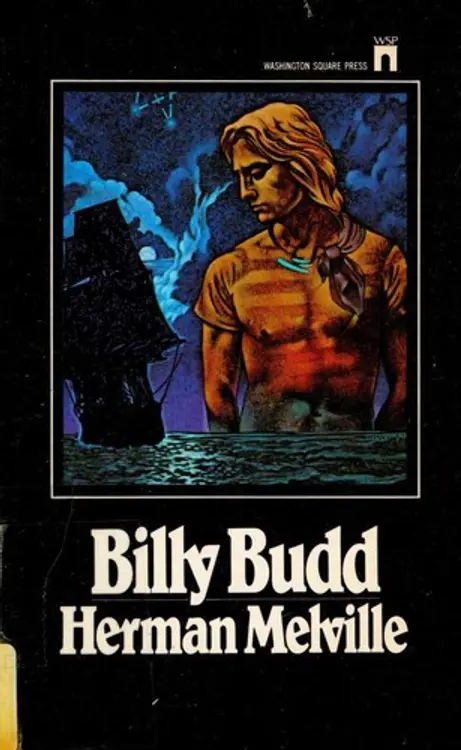
Billy Budd

Reading Melville's Pierre; Or, the Ambiguities
Hershel Parker, Higgins, Brian, Brian Higgins

Running with Scissors: A Memoir
Augusten Burroughs

Borrowed finery: a memoir
Paula Fox.

Seldom disappointed: a memoir
Tony Hillerman.
Reader Reviews
No reviews yet for this book.
Be the first to share your thoughts!