
In the Devil's Snare
The Salem Witchcraft Crisis of 1692
Our rough guess is there are 112,000 words in this book.
At a pace averaging 250 words per minute, this book will take 7 hours and 28 minutes to read. With a half hour per day, this will take 15 days to read.
How long will it take you?
This book will take an estimated to read at a reading speed averaging words per minute. With 30 minutes per day, this will take to read.
Enter your reading speedYou can take one of our WPM reading speed tests to find your reading speed.
Create a free account to track your reading progress, build your reading list, and set reading goals.
Word Count
112,000 words, Guess
Page Count
448 pages
Identifiers
- Open LibraryOL7426396M
- ISBN-139780375706905
- ISBN-100375706909
- OCLC Control Number53208261
- OCLC Control Numberindevilssnare00mary
and 2 more
- Goodreads105797
- LibraryThing13471
Classifications
- LCCBF1575.N67 2002
Description
"In January 1692 in Salem Village, Massachusetts, two young girls began to suffer from inexplicable fits. Seventeen months later, after legal action had been taken against 144 people - 20 of them put to death - the ignominious Salem witchcraft trials finally came to an end.". "Now, Mary Beth Norton - one of our most admired historians - gives us a unique account of the events at Salem, helping us to understand them as they were understood by those who lived through the frenzy. Describing the situation from a seventeenth-century perspective, Norton examines the crucial turning points, the accusers, the confessors, the judges, and the accused, among whom were thirty-eight men. She shows how the situation spiraled out of control following a cascade of accusations beginning in mid-April. She explores the role of gossip and delves into the question of why women and girls under the age of twenty-five, who were the most active accusers and who would normally be ignored by male magistrates, were suddenly given absolute credence."--BOOK JACKET.
First Sentence
About noon, in heavy snow, when (in the words of a contemporary historian) "the Inhabitants were in their unguarded Houses, here and their scattered , Quiet and Secure." about 150 Indians led by Madockawando, a sachem of the Penobscot band of the Wabanakis, took York completely by surprise.
Description
In January 1692 in Salem Village, Massachusetts, two young girls began to suffer from inexplicable fits. Seventeen months later, after legal action had been taken against 144 people, 20 of them put to death, the ignominious Salem witchcraft trials finally came to an end. Mary Beth Norton gives us a unique account of the events at Salem, helping us to understand them as they were understood by those who lived through the frenzy. Describing the situation from a seventeenth-century perspective, Norton examines the crucial turning points, the accusers, the confessors, the judges, and the accused, among whom were thirty-eight men. She shows how the situation spiraled out of control following a cascade of accusations beginning in mid-April. She explores the role of gossip and delves into the question of why women and girls under the age of twenty-five, who were the most active accusers and who would normally be ignored by male magistrates, were suddenly given absolute credence. Norton moves beyond the immediate vicinity of Salem to demonstrate how the Indian wars on the Maine frontier in the last quarter of that century stunned the collective mindset of northeastern New England and convinced virtually everyone that they were in the devil's snare. And she makes clear that ultimate responsibility for allowing the crisis to reach the heights it did must fall on the colony's governor, council, and judges.
Subjects
Topics
Places
Other Editions
- In the Devil's Snare: The Salem Witchcraft Crisis of 1692
Similar Books

The Witches: Salem, 1692
Stacy Schiff
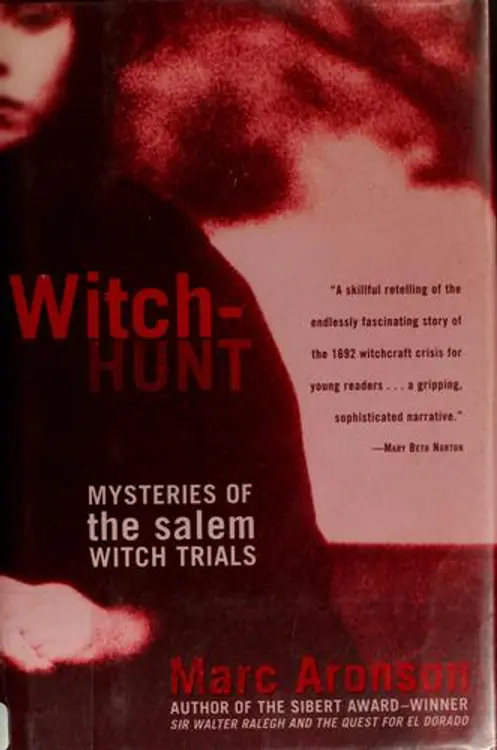
Witch-hunt: mysteries of the Salem witch trials
Marc Aronson
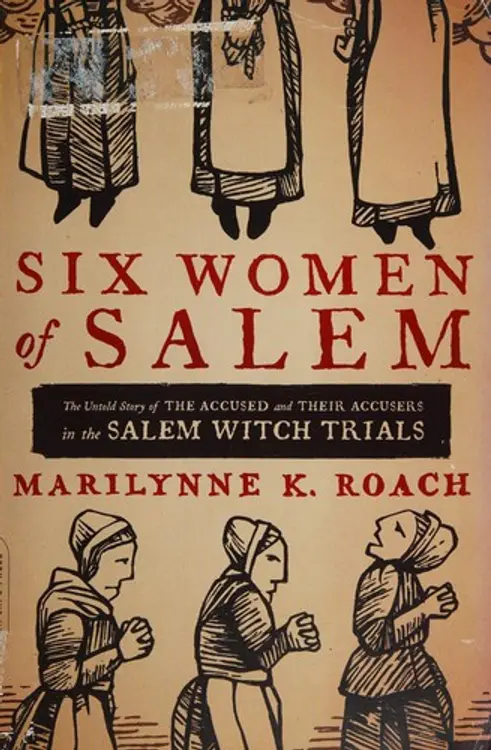
Six women of Salem: the untold story of the accused and their accusers in the salem witch trials
Marilynne K. Roach

Salem possessed: the social origins of witchcraft
Paul Boyer and Stephen Nissenbaum.

On witchcraft
Cotton Mather.

The Heretic's Daughter
Kathleen Kent

The Salem witch hunt: a brief history with documents
Richard Godbeer

The Crucible
Miller, Arthur
Reader Reviews
No reviews yet for this book.
Be the first to share your thoughts!