
Managing Financial Risk
A Guide to Derivative Products, Financial Engineering, and Value Maximization
We couldn't estimate the reading time for this book.
Publication
1994-11-01 - Irwin Professional Publishing
Language
English
Word Count
0 words, Guess
Page Count
0 pages
Physical Format
Hardcover
Identifiers
- Internet Archivemanagingfinancia0000smit_d3a8
- Internet Archivemanagingfinancia0000smit_d7r5
- ISBN-100786304332
- ISBN-139780786304332
- Goodreads2709732
and 3 more
- LibraryThing1311942
- Library of Congress Control Number94021824
- Open LibraryOL11045166M
Classifications
- LCCHG4026 .S63 1995
Description
Derivatives - the "complex" controversial hedging instruments - have the power to enhance the value of the firm ... or compound financial loss. Corporate financial executives must be especially aware of the risks and rewards of derivative products in order to maximize the value of their organizations. Managing Financial Risk provides an up-to-date, comprehensive look at how derivatives can be used to manage risk and maximize value within today's highly volatile financial environment. The authors - all internationally recognized authorities on risk management issues - provide in-depth explanations of forwards, futures, swaps, options, and "exotic" derivatives, showing how to use these instruments to hedge a firm against unexpected market swings and movements in foreign exchange rates, interest rates, and commodity prices. These explanations are further clarified through the book's helpful examples and illustrations, but most of all through contributions from industry experts. These include dealers from Chase Manhattan, Citibank, Credit Suisse Financial Products, and J.P. Morgan. End-user contributors include experts from Cuba-Geigy, Kodak, and McDonald's. Experts from FASB; Arthur Andersen; Cravath, Swaine & Moore; and Lord Day address accounting and tax issues. Invaluable to every corporate financial professional, Managing Financial Risk explains how risk management can increase a firm's value; the variety of risk management products, including forwards, futures, swaps, options, and hybrid securities - as well as a practical approach to implementing these products in your firm; and the essentials of financial engineering, including how to build customized hedging instruments that accomplish your organization's specific risk management objectives. As worldwide markets evolve, your company will face a varied continuum of financial risks. Managing Financial Risk provides a system for evaluating and hedging these risks and using derivatives to navigate through increasingly chaotic financial markets.
First Sentence
Unpredictable movements in exchange rates, interest rates, and commodity prices not only can affect a firm's reported quarterly earnings but even may determine whether a firm survives.
Similar Books
Principles of managerial finance
Lawrence J. Gitman.
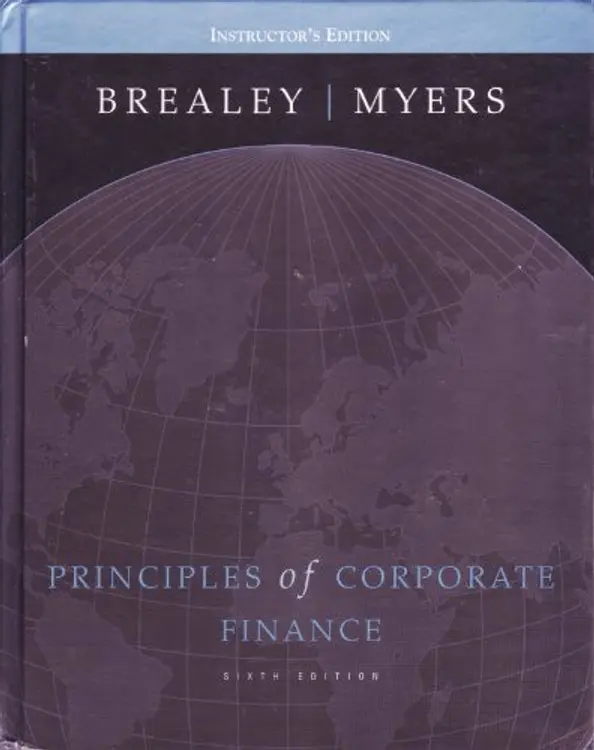
Principles of Corporate Finance
Pitabas Mohanty, Richard Brealey, Brealey Richard, BREALEY, David Brealey, Franklin Allen, Richard A. Brealey, Richard A Brealey, Richard Brealey, Richard Brealey and Stewart Myers and Franklin Allen, Stewart C Myers, Stewart C. Myers

Corporate finance
Stephen A. Ross, Randolph W. Westerfield, Jeffrey Jaffe.

Corporate Finance
Stephen A Ross, Jeffrey Jaffe, Randolph W Westerfield, Stephen A. Ross, Bradford D. Jordan, Randolph W. Westerfield

Corporate financial management
Douglas R. Emery, John D. Finnerty.
Reader Reviews
No reviews yet for this book.
Be the first to share your thoughts!