
Black on both sides
a racial history of trans identity
Our rough guess is there are 64,750 words in this book.
At a pace averaging 250 words per minute, this book will take 4 hours and 19 minutes to read. With a half hour per day, this will take 9 days to read.
How long will it take you?
This book will take an estimated to read at a reading speed averaging words per minute. With 30 minutes per day, this will take to read.
Enter your reading speedYou can take one of our WPM reading speed tests to find your reading speed.
Create a free account to track your reading progress, build your reading list, and set reading goals.
Author
Publication
2017 - University of Minnesota Press, Minnesota
Language
English
Word Count
64,750 words, Guess
Page Count
259 pages
Physical Format
Paperback
Identifiers
- ISBN-139781517901721
- ISBN-139781517901738
- ISBN-101517901723
- ISBN-101517901731
- Library of Congress Control Number2017042186
and 4 more
- OCLC Control Number982091801
- Better World Books9781517901738
- Better World Books9781517901721
- Open LibraryOL26941426M
Classifications
- DDC306.76/80973
- LCCHQ77.95.U6 S66 2017
- LCCHQ77.95.U6S66 2017
Description
The story of Christine Jorgensen, Americas first prominent transsexual, famously narrated trans embodiment in the postwar era. Her celebrity, however, has obscured other mid-century trans narratives-ones lived by African Americans such as Lucy Hicks Anderson and James McHarris. Their erasure from trans history masks the profound ways race has figured prominently in the construction and representation of transgender subjects. C. Riley Snorton identifies multiple intersections between blackness and transness from the mid-nineteenth century to present-day anti-black and anti-trans legislation and violence. Drawing on a deep and varied archive of materials-early sexological texts, fugitive slave narratives, Afro-modernist literature, sensationalist journalism, Hollywood films-Snorton attends to how slavery and the production of racialized gender provided the foundations for an understanding of gender as mutable. In tracing the twinned genealogies of blackness and transness, Snorton follows multiple trajectories, from the medical experiments conducted on enslaved black women by J. Marion Sims, the father of American gynecology, to the negation of blackness that makes transnormativity possible. Revealing instances of personal sovereignty among blacks living in the antebellum North that were mapped in terms of cross dressing and canonical black literary works that express black mens' access to the female within, he concludes with a reading of the fate of Phillip DeVine, who was murdered alongside Brandon Teena in 1993, a fact omitted from the film Boys Don't Cry out of narrative convenience.
Description
The story of Christine Jorgensen, Americas first prominent transsexual, famously narrated trans embodiment in the postwar era. Her celebrity, however, has obscured other mid-century trans narratives-ones lived by African Americans such as Lucy Hicks Anderson and James McHarris. Their erasure from trans history masks the profound ways race has figured prominently in the construction and representation of transgender subjects. C. Riley Snorton identifies multiple intersections between blackness and transness from the mid-nineteenth century to present-day anti-black and anti-trans legislation and violence. Drawing on a deep and varied archive of materials-early sexological texts, fugitive slave narratives, Afro-modernist literature, sensationalist journalism, Hollywood films-Snorton attends to how slavery and the production of racialized gender provided the foundations for an understanding of gender as mutable. In tracing the twinned genealogies of blackness and transness, Snorton follows multiple trajectories, from the medical experiments conducted on enslaved black women by J. Marion Sims, the father of American gynecology, to the negation of blackness that makes transnormativity possible. Revealing instances of personal sovereignty among blacks living in the antebellum North that were mapped in terms of cross dressing and canonical black literary works that express black mens' access to the female within, he concludes with a reading of the fate of Phillip DeVine, who was murdered alongside Brandon Teena in 1993, a fact omitted from the film Boys Don't Cry out of narrative convenience.
Subjects
Topics
Places
Other Editions
- Black on both sides: a racial history of trans identity
Similar Books
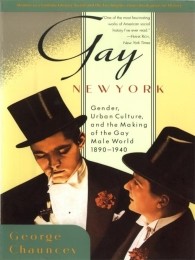
Gay New York: Gender, Urban Culture, and the Making of the Gay Male World, 1890-1940
[by] George Chauncey

George
Alex Gino

Coming Out Under Fire
Allan Bérubé, Victor Bevine

The Greeks and Greek Love
James N. Davidson, James Davidson

The other side of silence: men's lives and gay identities : a twentieth century history
John Loughery.

Tiny pieces of skull: or, a lesson in manners
by Roz Kaveney
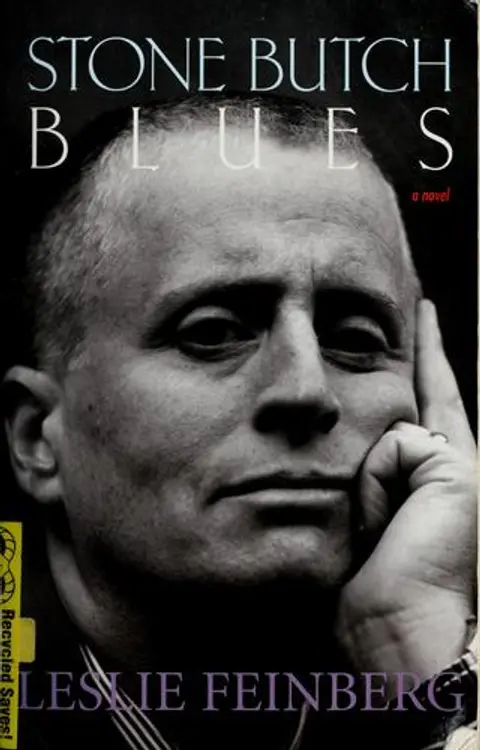
Stone Butch Blues: a novel
Leslie Feinberg
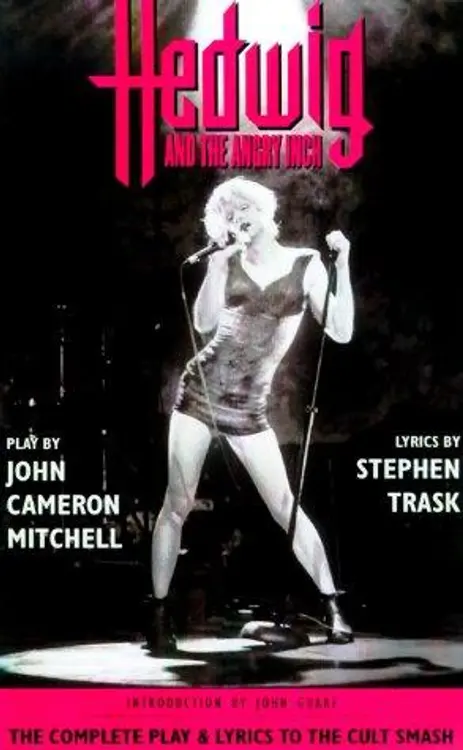
Hedwig and the Angry Inch
Stephen Trask, John Cameron Mitchell
Reader Reviews
No reviews yet for this book.
Be the first to share your thoughts!