
The Port Chicago 50
disaster, mutiny, and the fight for civil rights
1st ed.
Our rough guess is there are 50,000 words in this book.
At a pace averaging 250 words per minute, this book will take 3 hours and 20 minutes to read. With a half hour per day, this will take 7 days to read.
How long will it take you?
This book will take an estimated to read at a reading speed averaging words per minute. With 30 minutes per day, this will take to read.
Enter your reading speedYou can take one of our WPM reading speed tests to find your reading speed.
Create a free account to track your reading progress, build your reading list, and set reading goals.
Author
Publication
2014 - Roaring Brook Press, New York, New York (State)
Language
English
Word Count
50,000 words, Guess
Page Count
200 pages
Identifiers
- Internet Archiveportchicago50dis0000shei
- ISBN-139781596437968
- ISBN-101596437960
- Library of Congress Control Number2013013452
- OCLC Control Number841206020
and 2 more
- Better World Books9781596437968
- Open LibraryOL27155065M
Classifications
- DDCj940.5453
- DDC940.54
- DDC940.54/53/08996073079463
and 2 more
- LCCD810.N4S44 2014
- LCCD810.N4 S44 2014
Alternate Titles
- Port Chicago fifty
Description
"In San Francisco Bay there was a United States Navy base called Port Chicago. During World War II, it was a busy port where young sailors--many of them teenagers--loaded bombs and ammunition into ships bound for American troops in the Pacific. Like the entire Navy, Port Chicago was strictly segregated. All the officers giving orders were white; all the men loading bombs were black. On July 17, 1944, a massive explosion rocked Port Chicago, killing 320 servicemen and injuring hundreds more. But the truly remarkable part of the story was still to come. Surviving black sailors were taken to a nearby base and ordered to return to the same exact work. More than 200 of the men refused unless the unsafe and unfair conditions at the docks were addressed. The sailors called it standing up for justice. The Navy called it mutiny and threatened that anyone not immediately returning to work would face the firing squad. Most of the men agreed to back down. Fifty did not. This is a dramatic story of prejudice and injustice in America's armed forces during World War II, and a provocative look at a controversial group of young sailors who took a stand that helped change the course of history"--Jacket flap. In July 1944, an explosion at a California navy base killed hundreds of sailors loading munitions. Fifty black seamen, refusing to resume work in unsafe conditions, were charged with mutiny. The text contains profanity, violence, and racial slurs.
Description
"In San Francisco Bay there was a United States Navy base called Port Chicago. During World War II, it was a busy port where young sailors--many of them teenagers--loaded bombs and ammunition into ships bound for American troops in the Pacific. Like the entire Navy, Port Chicago was strictly segregated. All the officers giving orders were white; all the men loading bombs were black. On July 17, 1944, a massive explosion rocked Port Chicago, killing 320 servicemen and injuring hundreds more. But the truly remarkable part of the story was still to come. Surviving black sailors were taken to a nearby base and ordered to return to the same exact work. More than 200 of the men refused unless the unsafe and unfair conditions at the docks were addressed. The sailors called it standing up for justice. The Navy called it mutiny and threatened that anyone not immediately returning to work would face the firing squad. Most of the men agreed to back down. Fifty did not. This is a dramatic story of prejudice and injustice in America's armed forces during World War II, and a provocative look at a controversial group of young sailors who took a stand that helped change the course of history"--Jacket flap. In July 1944, an explosion at a California navy base killed hundreds of sailors loading munitions. Fifty black seamen, refusing to resume work in unsafe conditions, were charged with mutiny. The text contains profanity, violence, and racial slurs.
Subjects
Topics
Times
Other Editions
- The Port Chicago 50: disaster, mutiny, and the fight for civil rights
Similar Books

I Am Not Your Negro: A Companion Edition to the Documentary Film Directed by Raoul Peck
from texts by James Baldwin ; compiled and edited by Raoul Peck
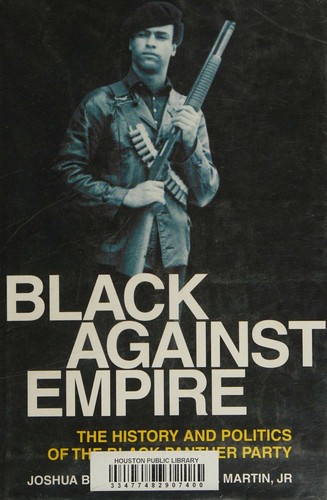
Black against empire: the history and politics of the Black Panther Party
Joshua Bloom and Waldo E. Martin, Jr
"I have a dream": the quotations of Martin Luther King Jr.
compiled and edited by Lotte Hoskins.
Reader Reviews
No reviews yet for this book.
Be the first to share your thoughts!