
The Holocaust and the war of ideas
Our rough guess is there are 60,500 words in this book.
At a pace averaging 250 words per minute, this book will take 4 hours and 2 minutes to read. With a half hour per day, this will take 8 days to read.
How long will it take you?
This book will take an estimated to read at a reading speed averaging words per minute. With 30 minutes per day, this will take to read.
Enter your reading speedYou can take one of our WPM reading speed tests to find your reading speed.
Create a free account to track your reading progress, build your reading list, and set reading goals.
We earn a commission on purchases
Author
Publication
1994 - Transaction Publishers, New Brunswick, New Jersey
Language
English
Word Count
60,500 words, Guess
Page Count
242 pages
Identifiers
- Open LibraryOL1403109M
- ISBN-101560001224
- OCLC Control Number28114374
- OCLC Control Numberholocaustwarofid0000alex
- Library of Congress Control Number93011119
and 1 more
- Goodreads5084020
Classifications
- DDC940.53/18/072
- LCCD804.3 .A425 1994
Description
The Holocaust and the War of Ideas begins with an analysis of ancient and modern antisemitism as the primary cause of the destruction of European Jewry. Alexander proceeds to interpret representative works from the three main bodies of Holocaust literature - Yiddish, American, Hebrew - in relation to the war of ideas that surrounds the historical catastrophe that is their subject. The chapter on Yiddish writers explores religious ideas and the claim that Yiddish, having become the language of martyrdom, has replaced Hebrew as the Jews' sacred tongue. The discussion of American writers centers on the attempts to Americanize Anne Frank, and criticizes the personalization of the Holocaust by literary latecomers to the subject who knew little of the Jewish past other than the Holocaust. Alexander treats sympathetically writers like Kovner and Appelfeld who integrated the European tragedy into the Israeli imagination, but charges that some Israeli dramatists have perpetrated travesties of the Holocaust that resemble antisemetic polemics. The second half of the book enters the seething cauldron of controversy in which the Holocaust is now engulfed. The chapter on Italian Jewry evaluates accusations of Vatican indifference and Primo Levi's allegations about German national character; the chapter "Crime and Punishment" reevaluates the writings of Arendt, Wiesenthal, and Weiss on the nature of Nazi war crimes, arguing that attempts to exculpate killers on the grounds that they were compelled to obey orders lack historical foundation. Alexander concludes the book with a survey of recent controversies: denial of the Holocaust; appropriation and relativization of it; the scandals of Bitburg and the Auschwitz Covenant. He imputes the pervasive deformations of the Holocaust to the fact that the war of ideas over the Holocaust has become part of the larger war forced upon the Jews by the foes of Zionism as an ideology and Israel as a nation.
Subjects
Topics
Times
Similar Books

Bloodscripts: writing the violent subject
Elana Gomel.
Judaizm jako los: rzecz o Bogdanie Wojdowskim
Alina Molisak.

Sevek and the Holocaust: the boy who refused to die
Sidney Finkel.

Maus II And Here My Troubles Began
Art Spiegelman. 2, And here my troubles began.
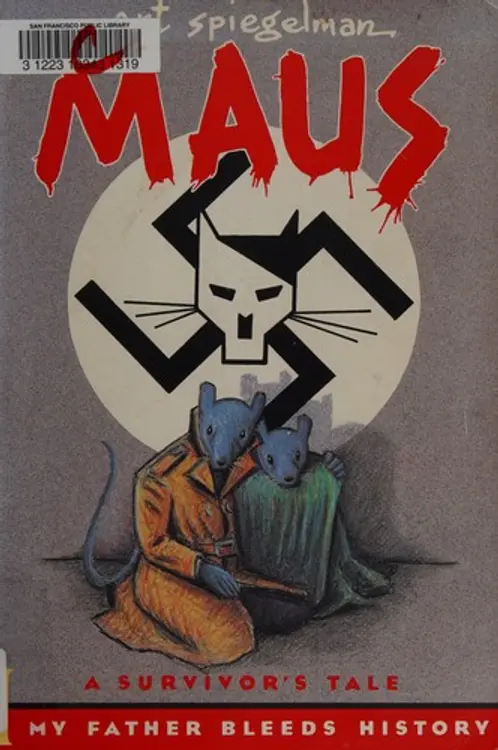
Maus I: a survivor's tale : my father bleeds history
Art Spiegelman.

Ordinary men: Reserve Police Battalion 101 and the final solution in Poland
Christopher R. Browning
The abandonment of the Jews: America and the Holocaust, 1941-1945
David S. Wyman.

The six days of destruction: meditations toward hope
by Elie Wiesel and Albert H. Friedlander.
Reader Reviews
No reviews yet for this book.
Be the first to share your thoughts!