
Mr. Jefferson's lost cause
land, farmers, slavery, and the Louisiana Purchase
Our rough guess is there are 87,500 words in this book.
At a pace averaging 250 words per minute, this book will take 5 hours and 50 minutes to read. With a half hour per day, this will take 12 days to read.
How long will it take you?
This book will take an estimated to read at a reading speed averaging words per minute. With 30 minutes per day, this will take to read.
Enter your reading speedYou can take one of our WPM reading speed tests to find your reading speed.
Create a free account to track your reading progress, build your reading list, and set reading goals.
We earn a commission on purchases
Author
Publication
2003 - Oxford University Press, Oxford, England
Language
English
Word Count
87,500 words, Guess
Page Count
350 pages
Identifiers
- Open LibraryOL18384445M
- ISBN-100195153472
- OCLC Control Number50477081
- Library of Congress Control Number2002027402
- LibraryThing547283
and 1 more
- Goodreads1361616
Classifications
- DDC973.4/6/092
- LCCE333 .K46 2003
Alternate Titles
- Mister Jefferson's lost cause
Description
Thomas Jefferson advocated a republic of small farmers -- free and independent yeomen. And yet as president he presided over a massive expansion of the slaveholding plantation system -- particularly with the Louisiana Purchase -- squeezing the yeomanry to the fringes and to less desirable farmland. Now Roger G. Kennedy conducts an eye-opening examination of that gap between Jefferson's stated aspirations and what actually happened. Kennedy reveals how the Louisiana Purchase had a major impact on land use and the growth of slavery. He examines the great financial interests (such as the powerful land companies that speculated in new territories and the British textile interests) that carried the day against slavery's many opponents in the South itself (Native Americans, African Americans, Appalachian farmers, and conscientious opponents of slavery). He describes how slaveholders' cash crops (first tobacco, then cotton) sickened the soil and how the planters moved from one desolated tract to the next. Soon the dominant culture of the entire region -- from Maryland to Florida, from Carolina to Texas -- was that of owners and slaves producing staple crops for international markets. The earth itself was impoverished, in many places beyond redemption. None of this, Kennedy argues, was inevitable. He focuses on the character, ideas, and ambitions of Thomas Jefferson to show how he and other Southerners struggled with the moral dilemmas presented by the presence of Indian farmers on land they coveted, by the enslavement of their workforce, by the betrayal of their stated hopes, and by the manifest damage being done to the earth itself. - Jacket flap.
Subjects
Topics
Places
People
Other Editions
- Mr. Jefferson's lost cause: land, farmers, slavery, and the Louisiana Purchase
Similar Books
The papers of James Madison: purchased by order of Congress, being his correspondence and reports of debates during the Congress of the Confederation and his reports of debates in the Federal Convention .
J. C. A. Stagg, Jeanne Kerr Cross, Robert J. Brugger, Madison, James, James Madison, Mary A. Hackett, Robert Allen Rutland

The wolf by the ears: Thomas Jefferson and slavery
John Chester Miller.

Writings
James Madison.
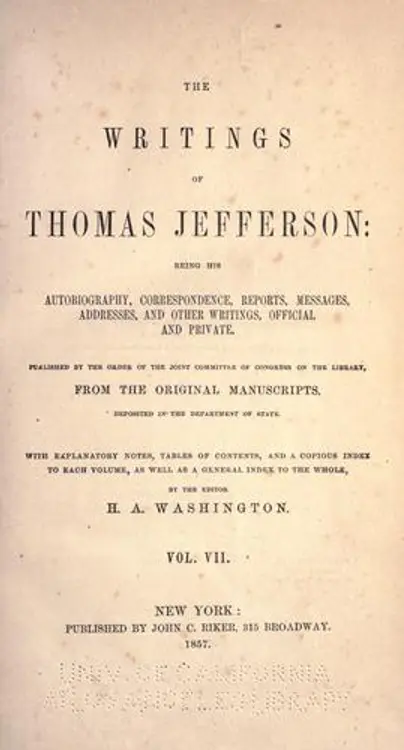
The writings of Thomas Jefferson: being his autobiography, correspondence, reports, messages, addresses, and other writings, official and private. Published by the order of the Joint Committee of Congress on the Library, from the original manuscripts, deposited in the Department of State.
With explanatory notes ... by the editor, H.A. Washington.
Class conflict, slavery, and the United States Constitution: ten essays
Staughton Lynd.
Friends divided: John Adams and Thomas Jefferson
Gordon S. Wood

The Declaration of Independence and Thomas Jefferson of Virginia
Kathy Furgang.
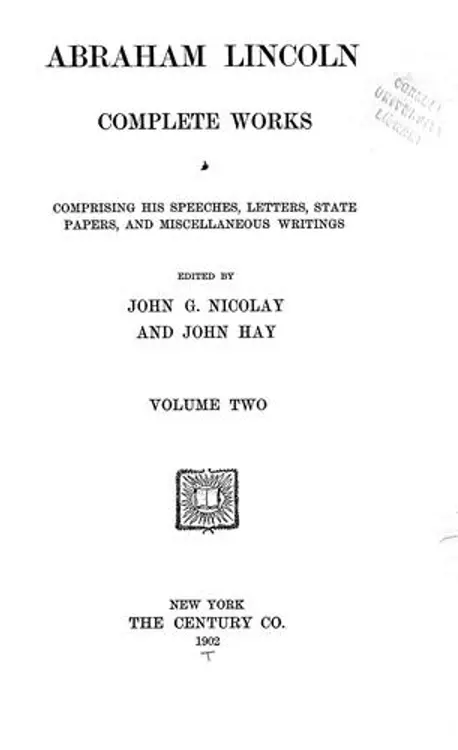
Abraham Lincoln: complete works, comprising his speeches, letters, state papers, and miscellaneous writings
Abraham Lincoln
Reader Reviews
No reviews yet for this book.
Be the first to share your thoughts!