
The scary Mason-Dixon Line
African American writers and the South
Our rough guess is there are 61,750 words in this book.
At a pace averaging 250 words per minute, this book will take 4 hours and 7 minutes to read. With a half hour per day, this will take 8 days to read.
How long will it take you?
This book will take an estimated to read at a reading speed averaging words per minute. With 30 minutes per day, this will take to read.
Enter your reading speedYou can take one of our WPM reading speed tests to find your reading speed.
Create a free account to track your reading progress, build your reading list, and set reading goals.
Author
Publication
2009 - Louisiana State University Press, Baton Rouge, Louisiana
Language
English
Word Count
61,750 words, Guess
Page Count
247 pages
Identifiers
- Internet Archivescarymasondixonl0000harr
- ISBN-139780801833953
- ISBN-100801833957
- Library of Congress Control Number2008031341
- OCLC Control Number234257235
and 1 more
- Open LibraryOL16992361M
Classifications
- DDC810.9/896073
- LCCPS153.N5 H293 2009
Description
New Yorker James Baldwin once declared that a black man can look at a map of the United States, contemplate the area south of the Mason-Dixon Line, and thus scare himself to death. In this book, the author a renowned literary scholar explores why black writers, whether born in Mississippi, New York, or elsewhere, have consistently both loved and hated the South. She explains that for these authors the South represents not so much a place or even a culture as a rite of passage. Not one of them can consider himself or herself a true African American writer without confronting the idea of the South in a decisive way. She considers native born black southerners Raymond Andrews, Ernest J. Gaines, Edward P. Jones, Tayari Jones, Yusef Komunyakaa, Randall Kenan, and Phyllis Alesia Perry, and nonsouthern writers James Baldwin, Sherley Anne Williams, and Octavia E. Butler. The works she examines date from Baldwin's Blues for Mr. Charlie (1964) to Edward P. Jones's The Known World (2003). By including Komunyakaa's poems and Baldwin's play, as well as male and female authors, she demonstrates that the writers' preoccupation with the South cuts across lines of genre and gender. Whether their writings focus on slavery, migration from the South to the North, or violence on southern soil, and whether they celebrate the triumph of black southern heritage over repression or castigate the South for its treatment of blacks, these authors cannot escape the call of the South. Indeed, she asserts that creative engagement with the South represents a defining characteristic of African American writing. A singular work by one of the foremost literary scholars writing today, this book demonstrates how history and memory continue to figure powerfully in African American literary creativity.
Subjects
Topics
Places
Times
Other Editions
- The scary Mason-Dixon Line: African American writers and the South
Similar Books

Shadow and act.
Ralph Ellison

The Black Columbiad: defining moments in African American literature and culture
edited by Werner Sollors, Maria Diedrich.
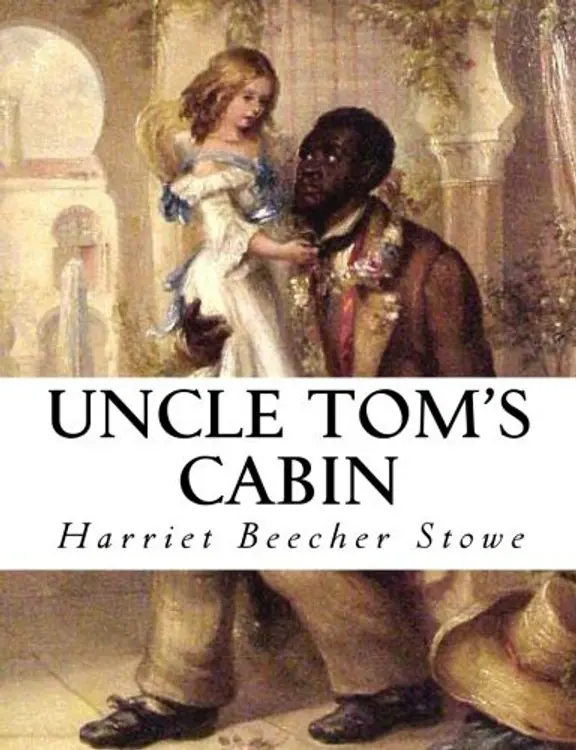
Uncle Tom's Cabin
Harriet Beecher Stowe
12h 9m read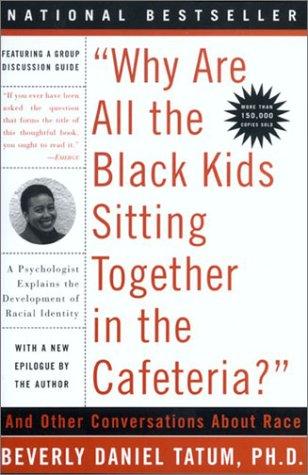
"Why are all the Black kids sitting together in the cafeteria?": and other conversations about race
Beverly Daniel Tatum.

Cultural Trauma: Slavery and the Formation of African American Identity (Cambridge Cultural Social Studies)
Ron Eyerman

Learning from difference: teaching Morrison, Twain, Ellison, and Eliot
Richard C. Moreland.

A companion to the Harlem Renaissance
edited by Cherene Sherrard-Johnson

Conversations with Ernest Gaines
edited by John Lowe.
Reader Reviews
No reviews yet for this book.
Be the first to share your thoughts!